Services
Septic, rock and everythingunder the driveway
Charlie's Excavating and Septic Services covers the full job on Salt Spring: the septic system, the excavation around it, and the road that gets a machine to both.
01
Septic system installation
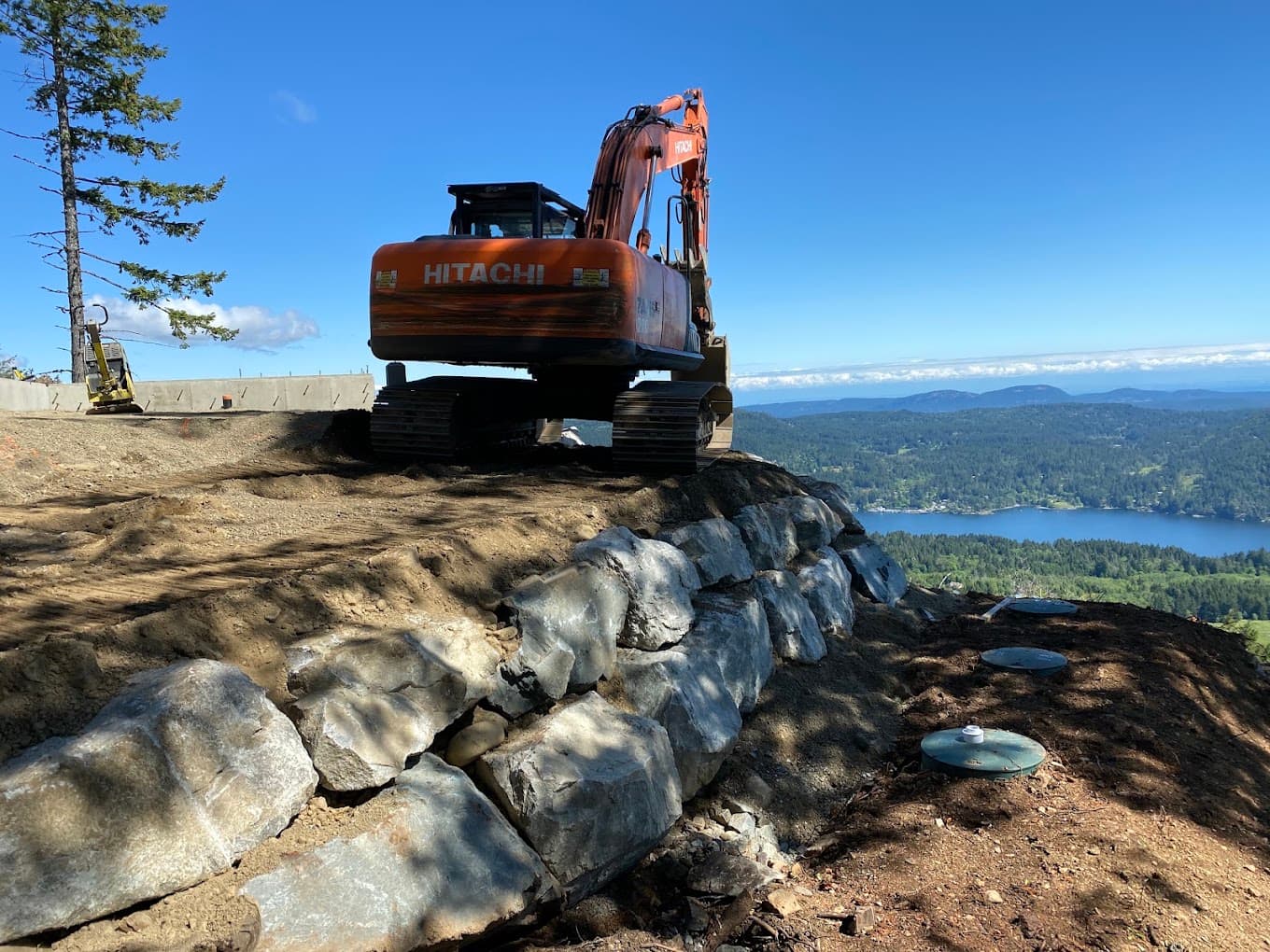
A new septic system is usually the single biggest hole anyone digs on a Salt Spring property, and the one with the most rules attached. Charlie's does the excavation, the tank, the field and the finish grade, and works to the plan filed for your lot.
- New systems for new builds
- Tank set, field build and final grading
- Excavation and rock work included in the same job
- Restoration of the ground once the system is in
02
Septic repairs and replacement
Systems fail at the worst time. Charlie's opens it up, finds what went, and fixes it, whether that is a collapsed line, a cracked tank or a field that has stopped taking water.
- Failing and saturated fields
- Broken and blocked lines
- Tank repairs and replacement
- Full system replacement
03
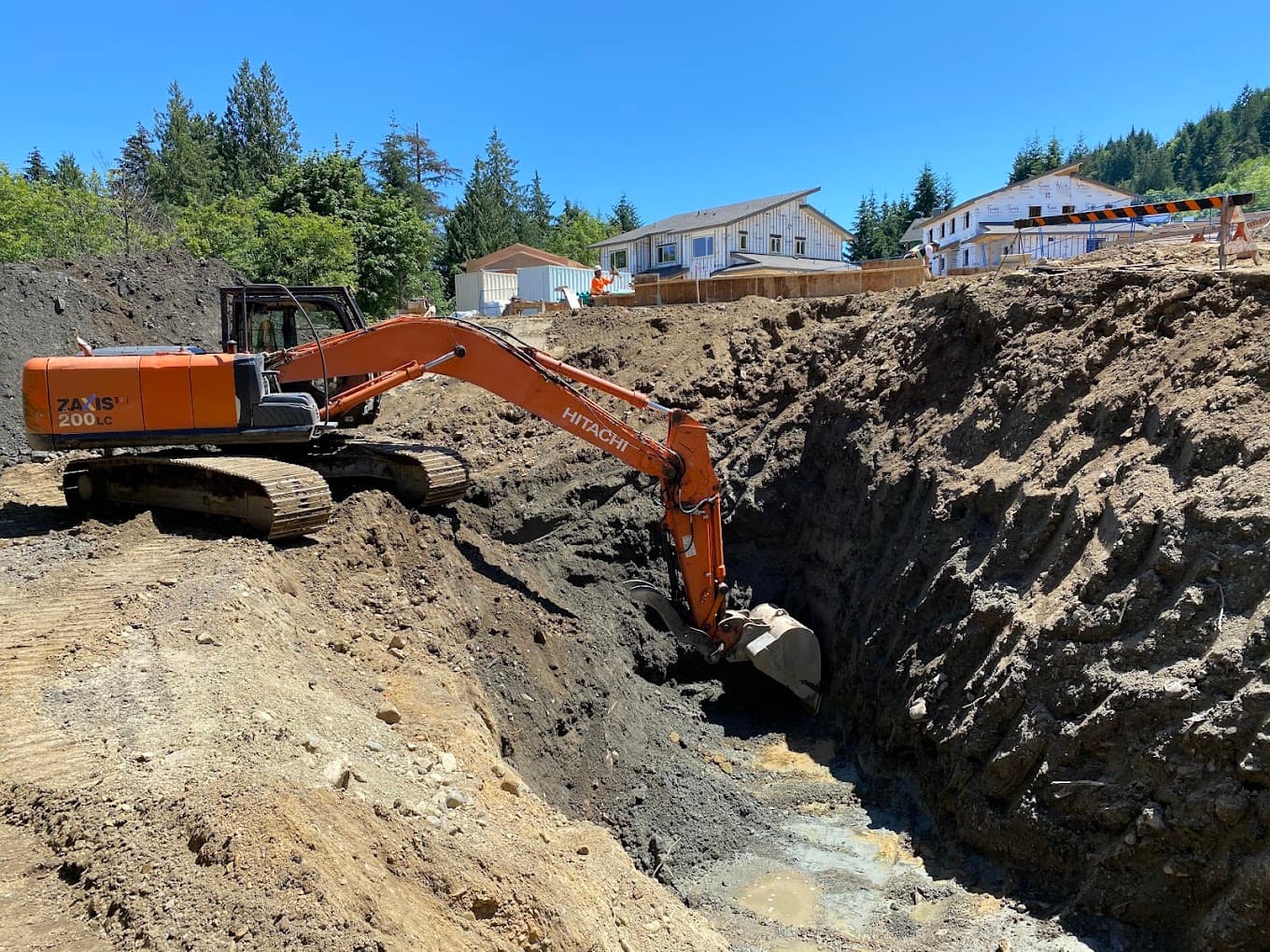
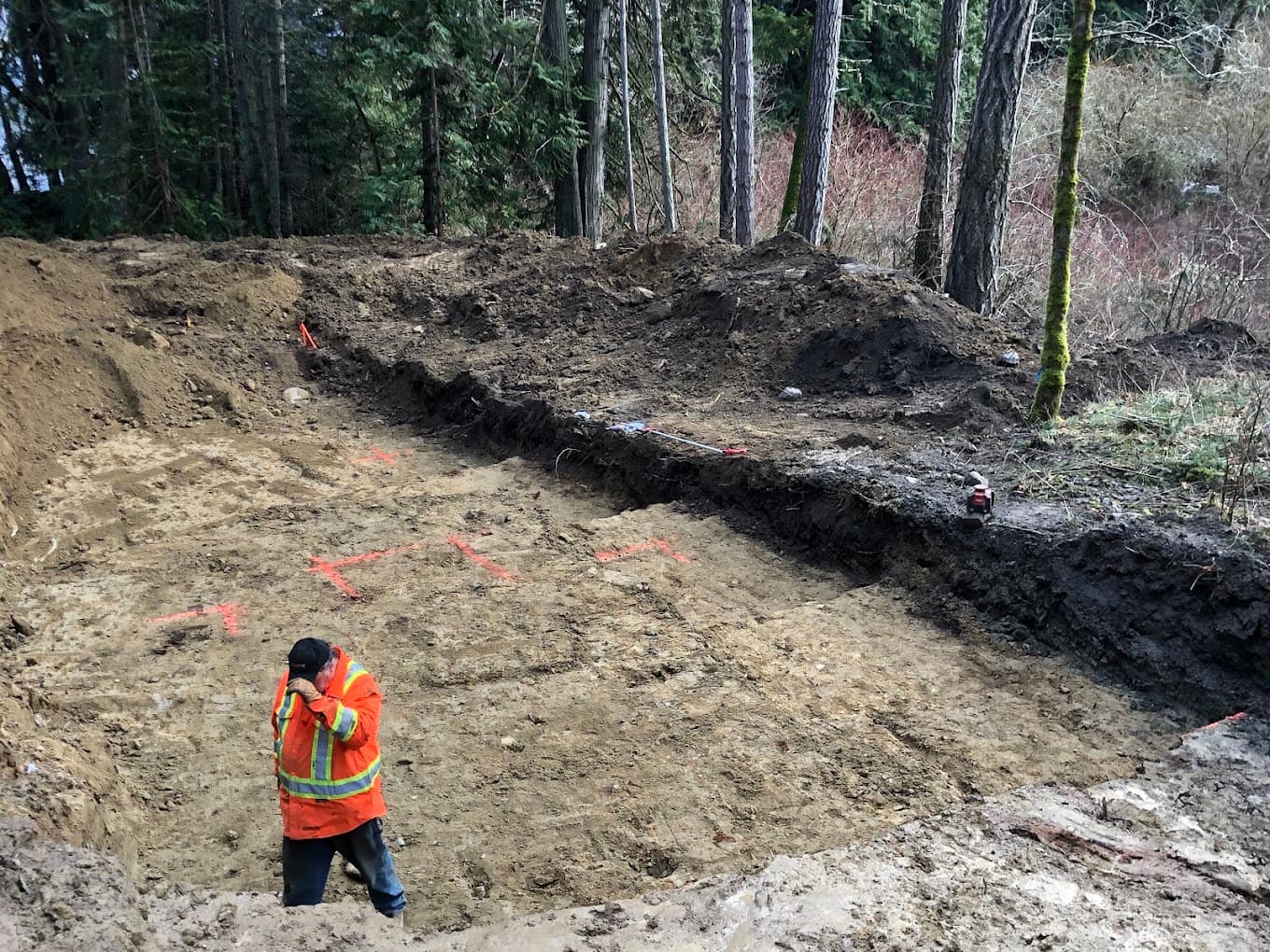
Excavation and site preparation
Foundations, building pads, basements and backfill. Charlie's works on new builds and on established properties where the machine has to get in without wrecking what is already there.
- Foundation and basement excavation
- Building pads and level benches
- Grading, backfill and finish
- Site layout and stakeout
04
Rock breaking
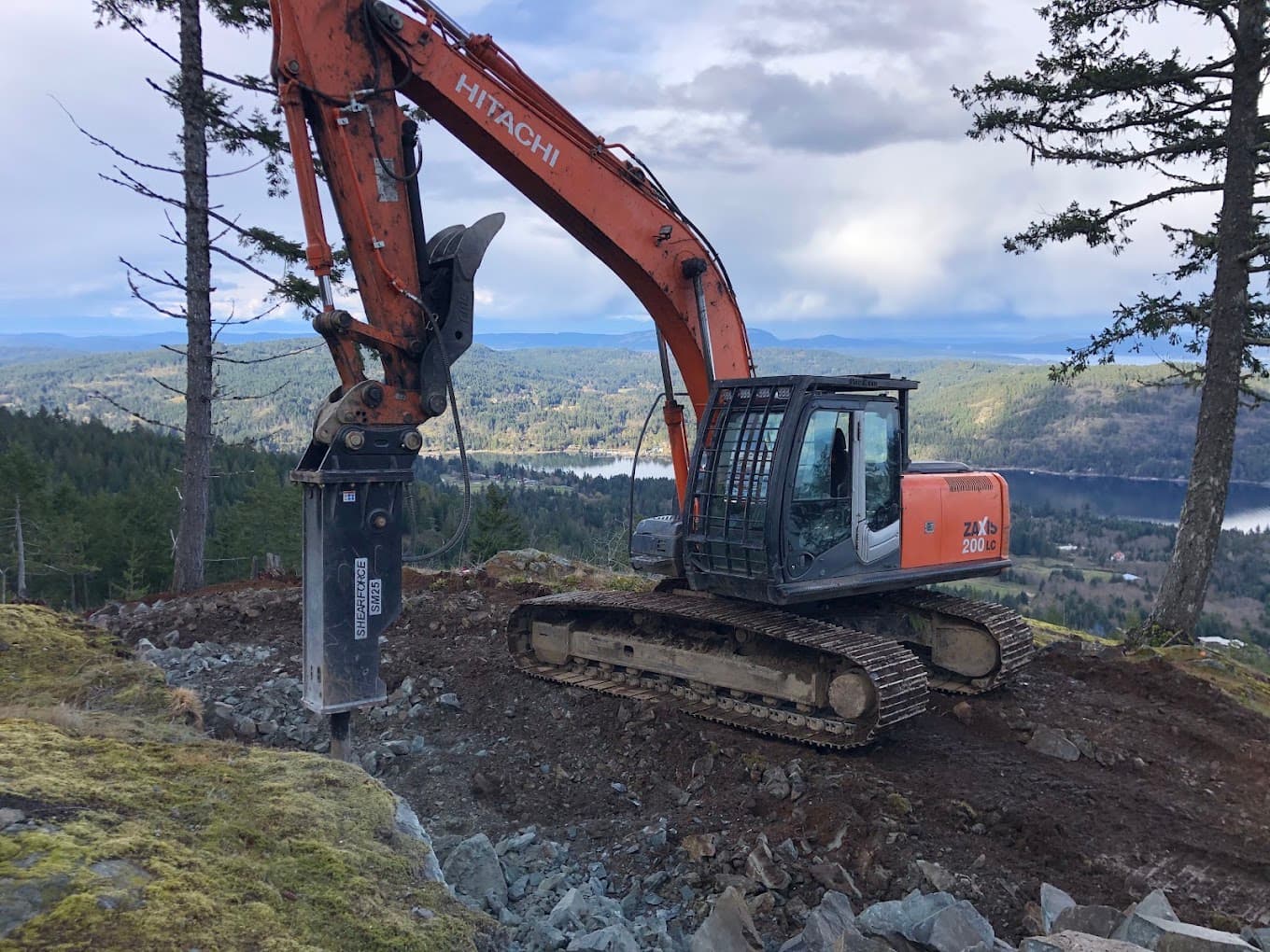
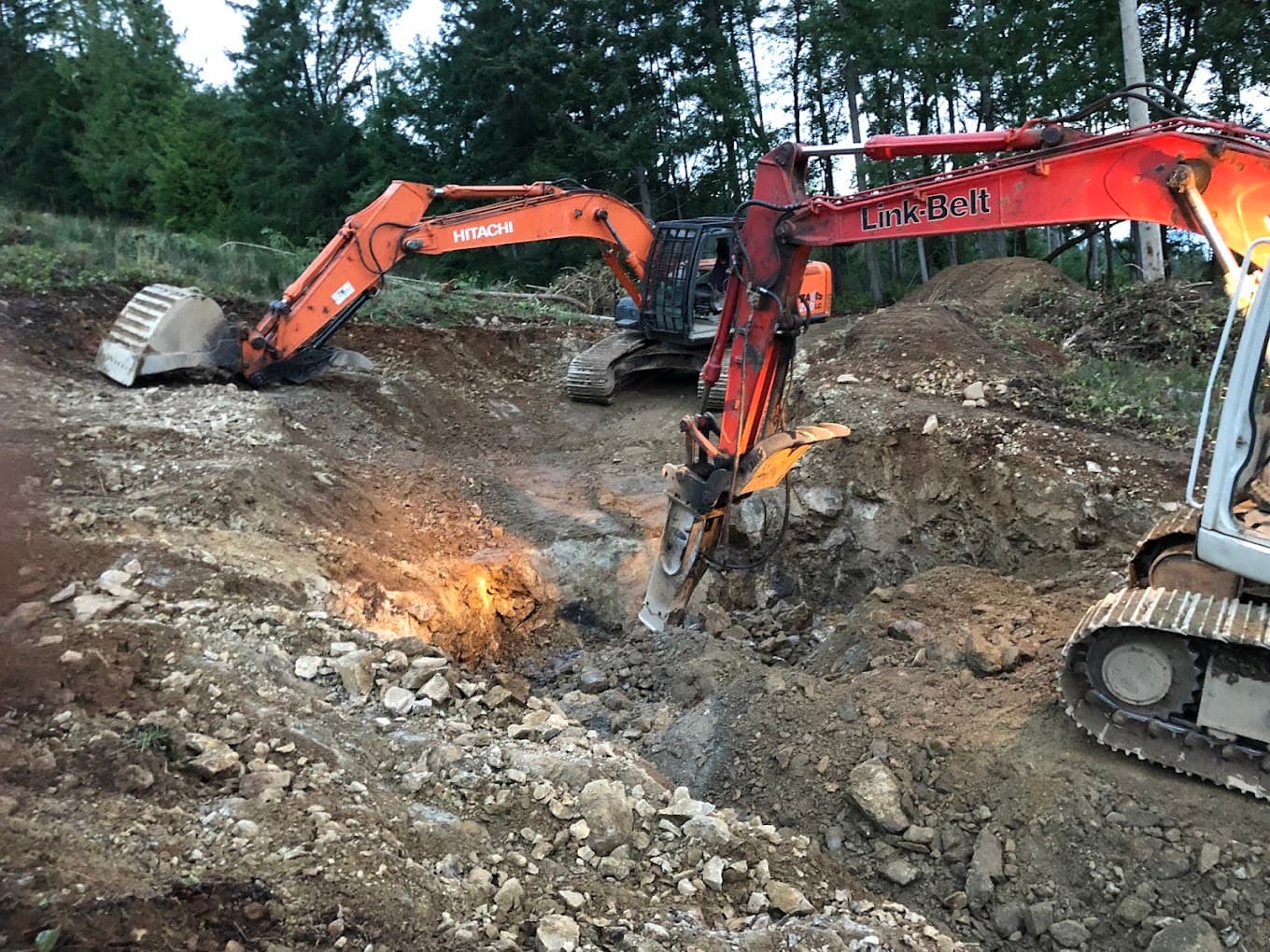
Bedrock is the reason island jobs stall. Charlie's runs a hydraulic breaker, so where a bucket stops the work carries on, whether it is a trench line, a field bed or a house corner.
- Hydraulic breaker for bedrock and boulders
- Trench lines and service runs through rock
- Benching and levelling on rock sites
- Rock removal and reuse on site
05
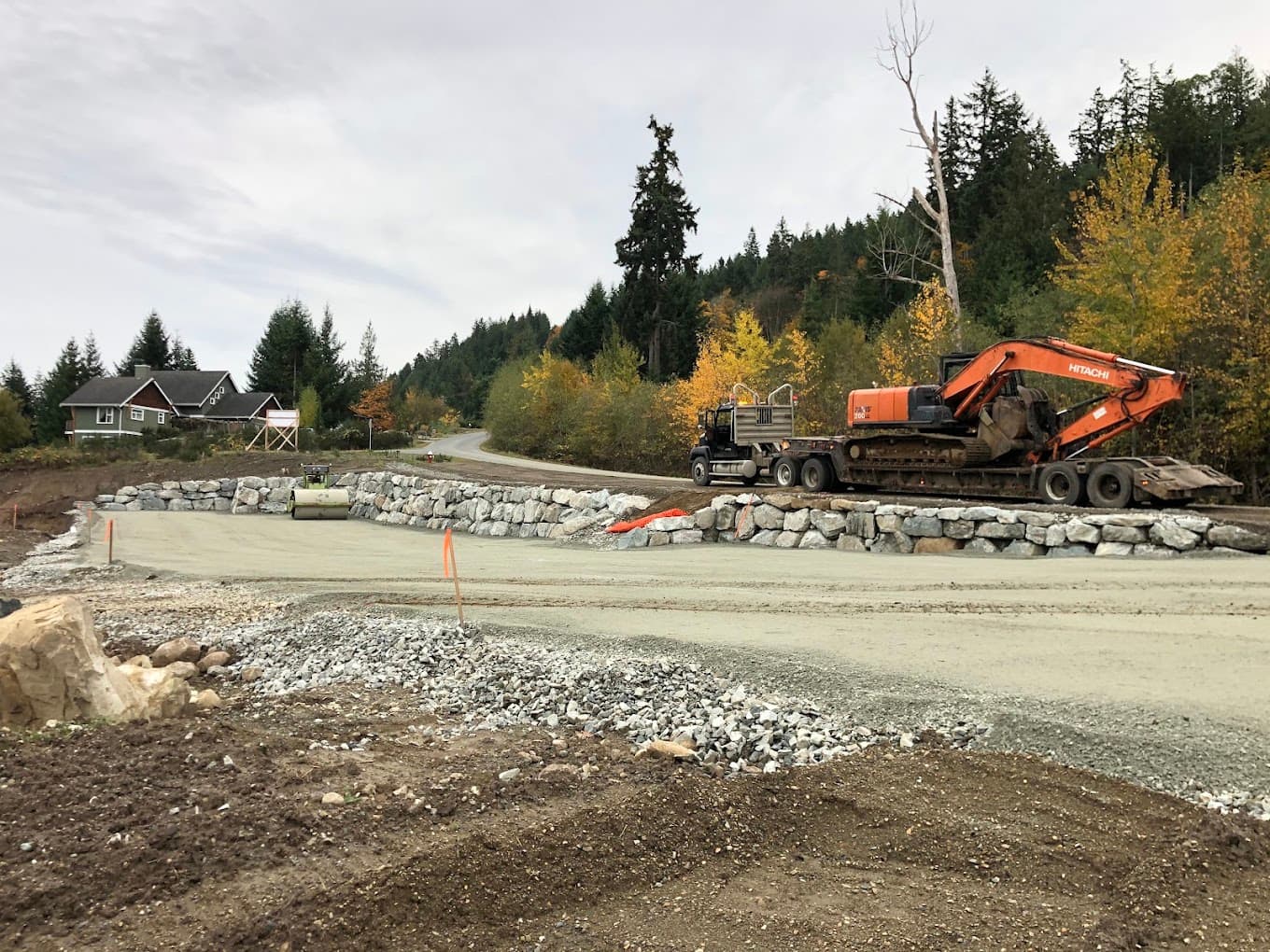
Retaining and rock walls
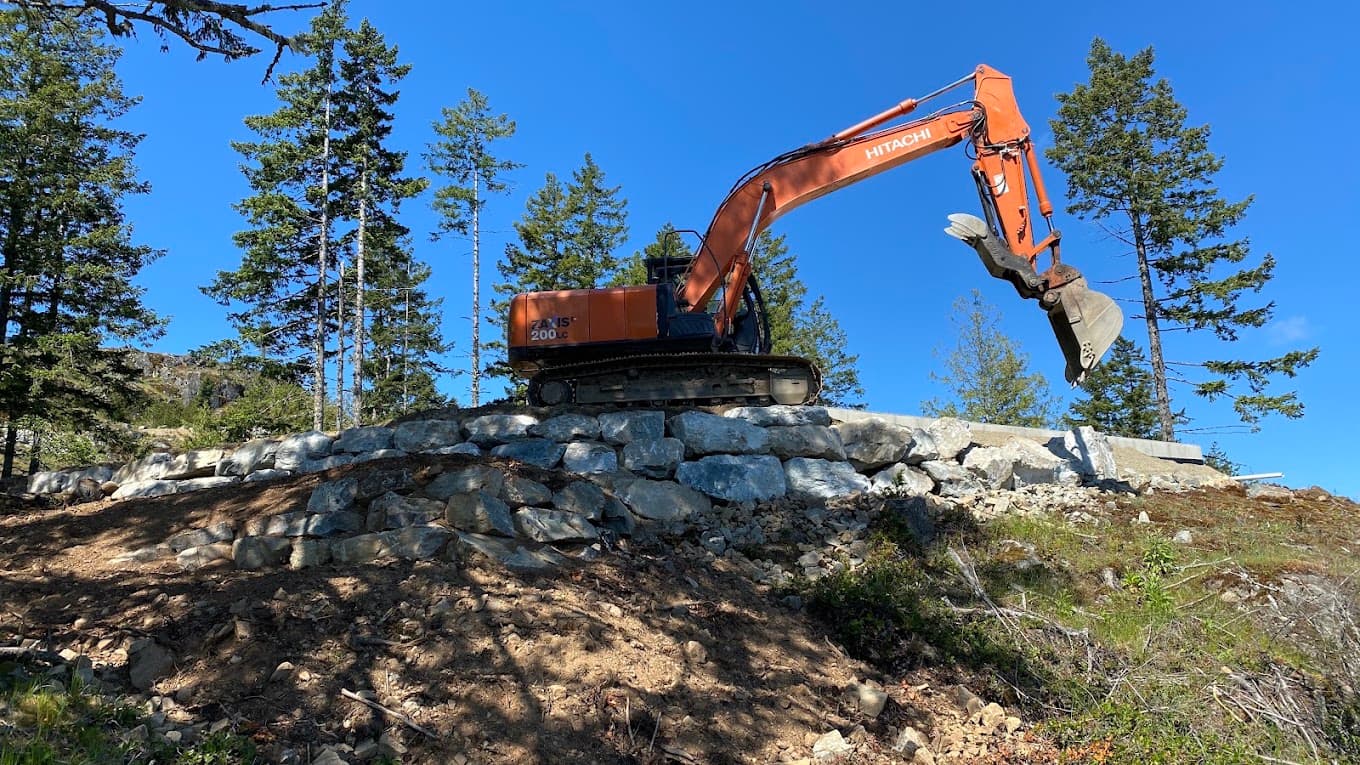
Armour rock placed to hold a bank, level a building site or turn a slope into somewhere usable. Rock that comes out of one part of a job often goes straight back into the wall on another.
- Armour-rock retaining walls
- Bank stabilisation
- Levelling and terracing sloped lots
- Rock sourced and placed on site
06
Driveways and pathways
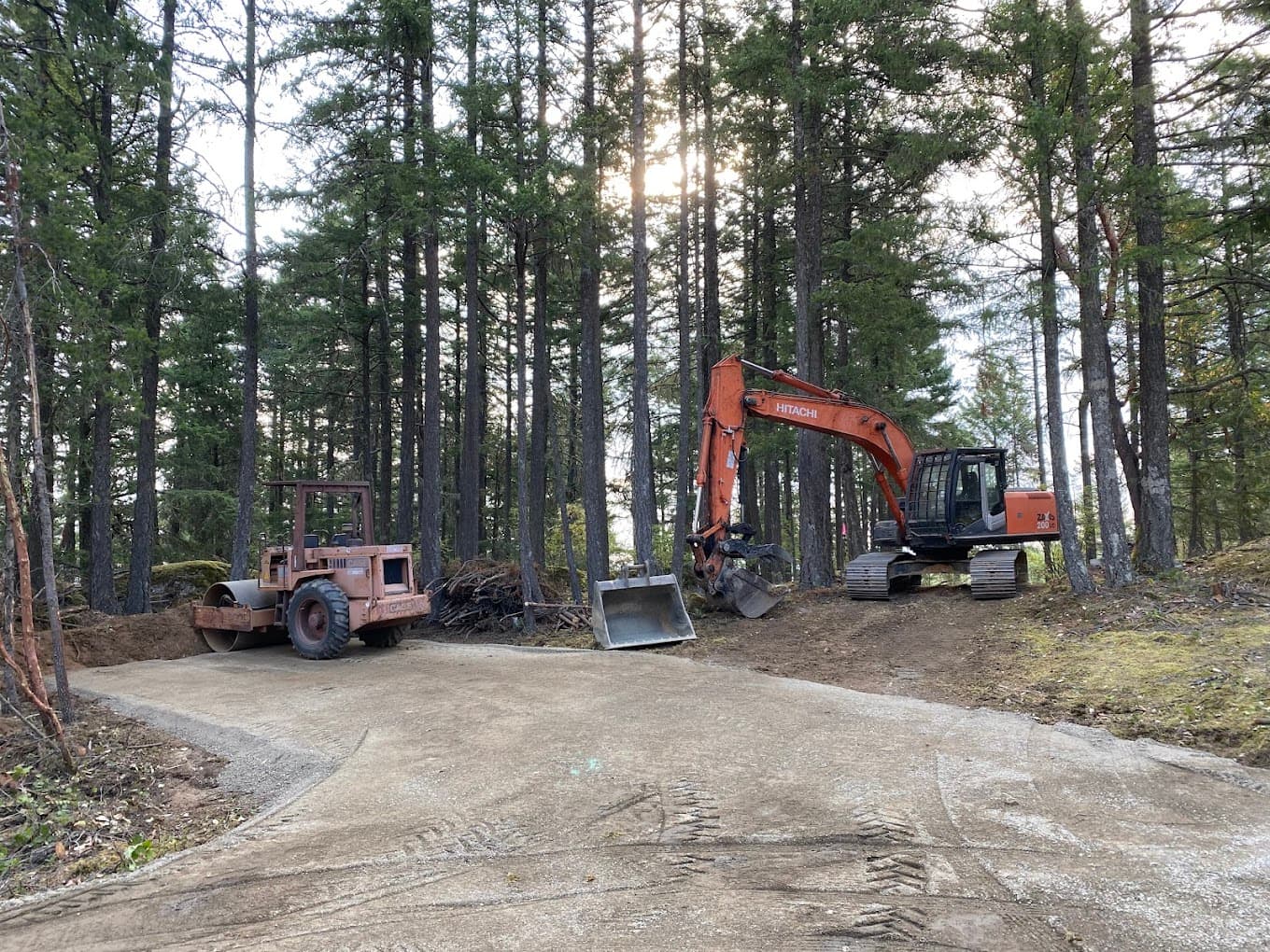
Island driveways get steep, wet and long. Charlie's cuts them in, builds the base, sets the drainage and rolls the surface so it holds through a Salt Spring winter.
- New driveways cut and built
- Base, gravel and compaction
- Culverts and driveway drainage
- Garden paths and access tracks
07
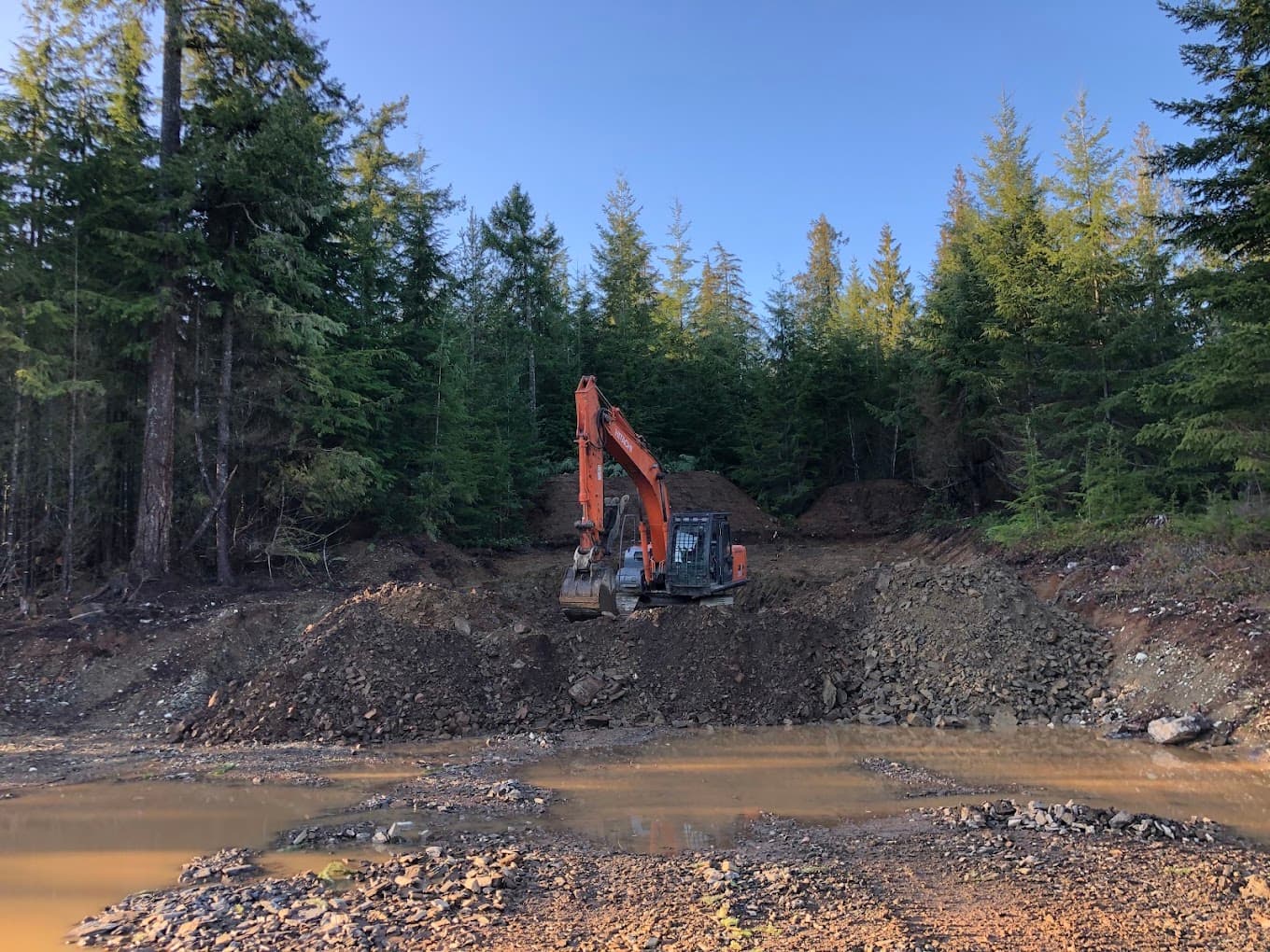
Land clearing and forest roads
Opening a lot up, taking out stumps and getting a road in far enough that the rest of the work is possible. On most island properties this is the first job, not the last.
- Lot clearing and stump removal
- Forest and access roads
- Building envelopes cleared and levelled
- Slash and debris handled
08
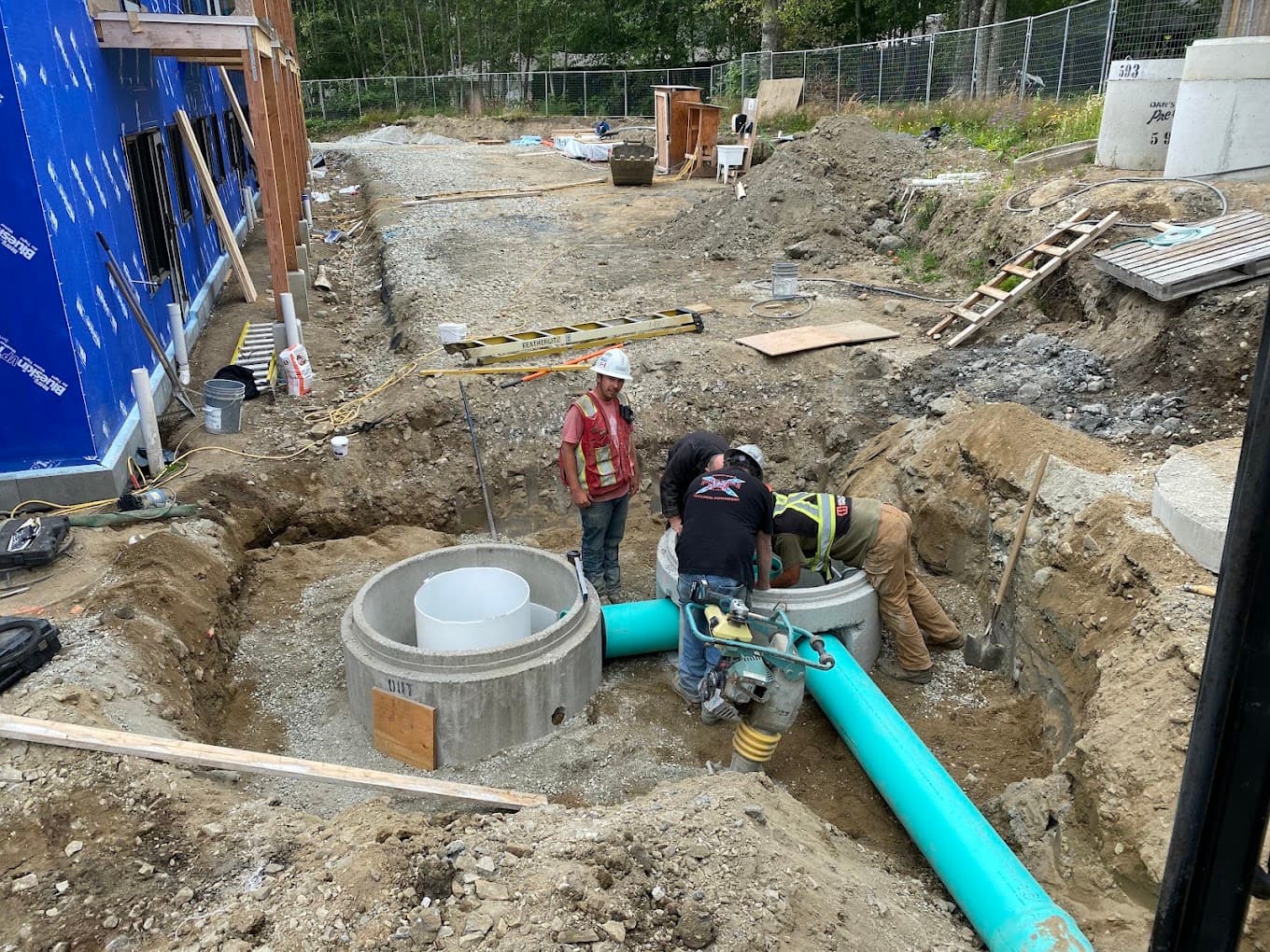
Drainage, culverts and utilities
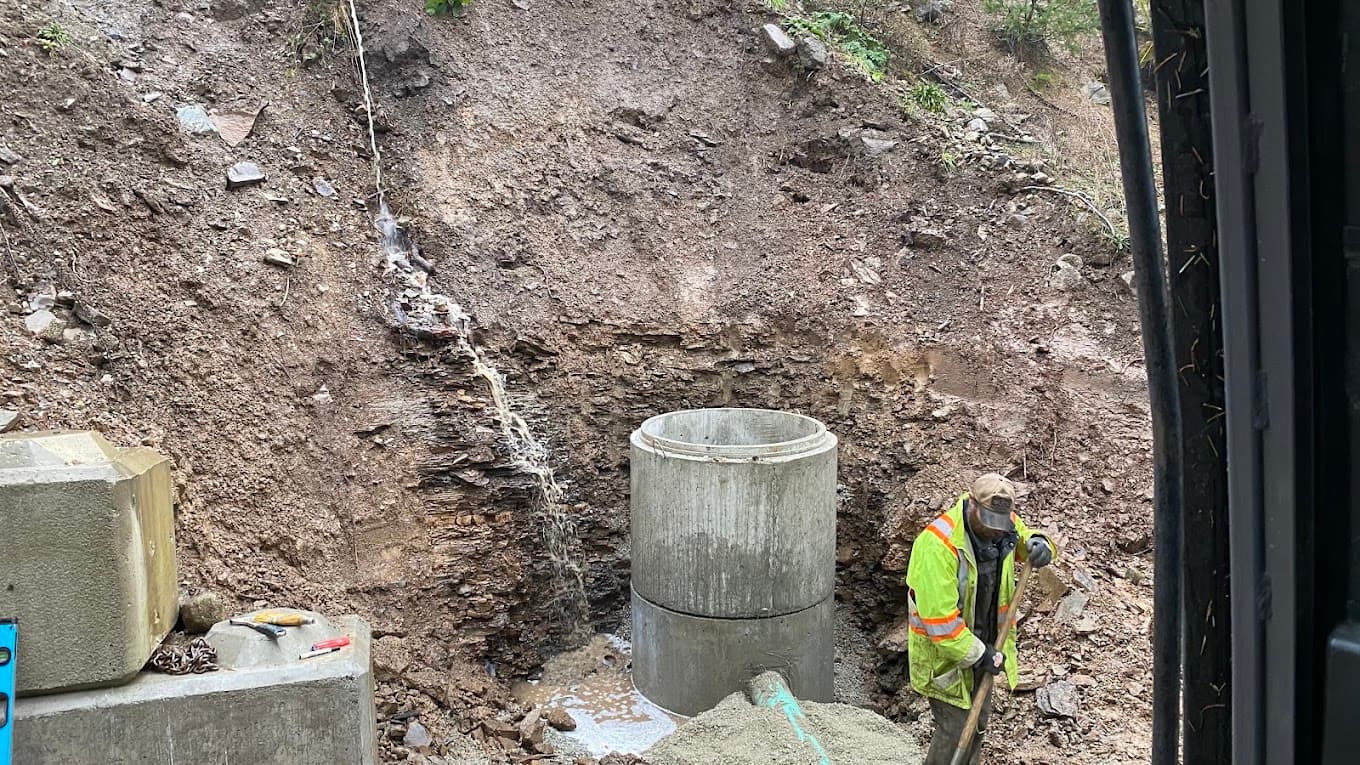
Water is the thing that eventually breaks everything else on this island. Charlie's puts in the storm and sewer mains, the manholes, the culverts and the perimeter drains, and trenches the services alongside.
- Storm and sewer mains, manholes
- Culverts and ditching
- Perimeter and foundation drains
- Water, power and service trenching
09
Trucking and material haul
Gravel, rock and fill in, spoil out, and the low-bed that gets the machine to your gate. Having the trucking on the same crew is what keeps a small island job from waiting on somebody else's schedule.
- Gravel, rock and fill delivered
- Spoil and debris hauled off
- Low-bed machine transport
- Material moved around a site
The other half
Pumping and maintenance
Charlie's does the work that needs a machine in the ground. Tank pumping, water jetting and grease traps are handled by All Out Septic, same owner, and they cover Pender, Mayne, Galiano and Saturna as well as Salt Spring.
(250) 537-8450
How a job goes
From the first call to the final grade
- 01
A look at the site
Walking the property is the only way to see the access, the slope and what the ground is likely doing underneath. It is also free.
- 02
The plan and the permit
A septic system needs a plan filed for your lot before anything is dug. Other work may need a permit from the Islands Trust or the CRD.
- 03
Machine on site
The low-bed brings in whatever fits the job and the driveway. Rock gets broken, the hole gets dug, material comes in and out.
- 04
Backfill and finish
The ground gets put back, graded and left tidy. On a septic job the system is filed and signed off.
Not sure which of these you need? That is what the first call is for.
Send the detailsGet started
Every job startswith a look at the site
Walking the property is free, and it is the only way to see the access, the slope and what the ground is doing underneath.